
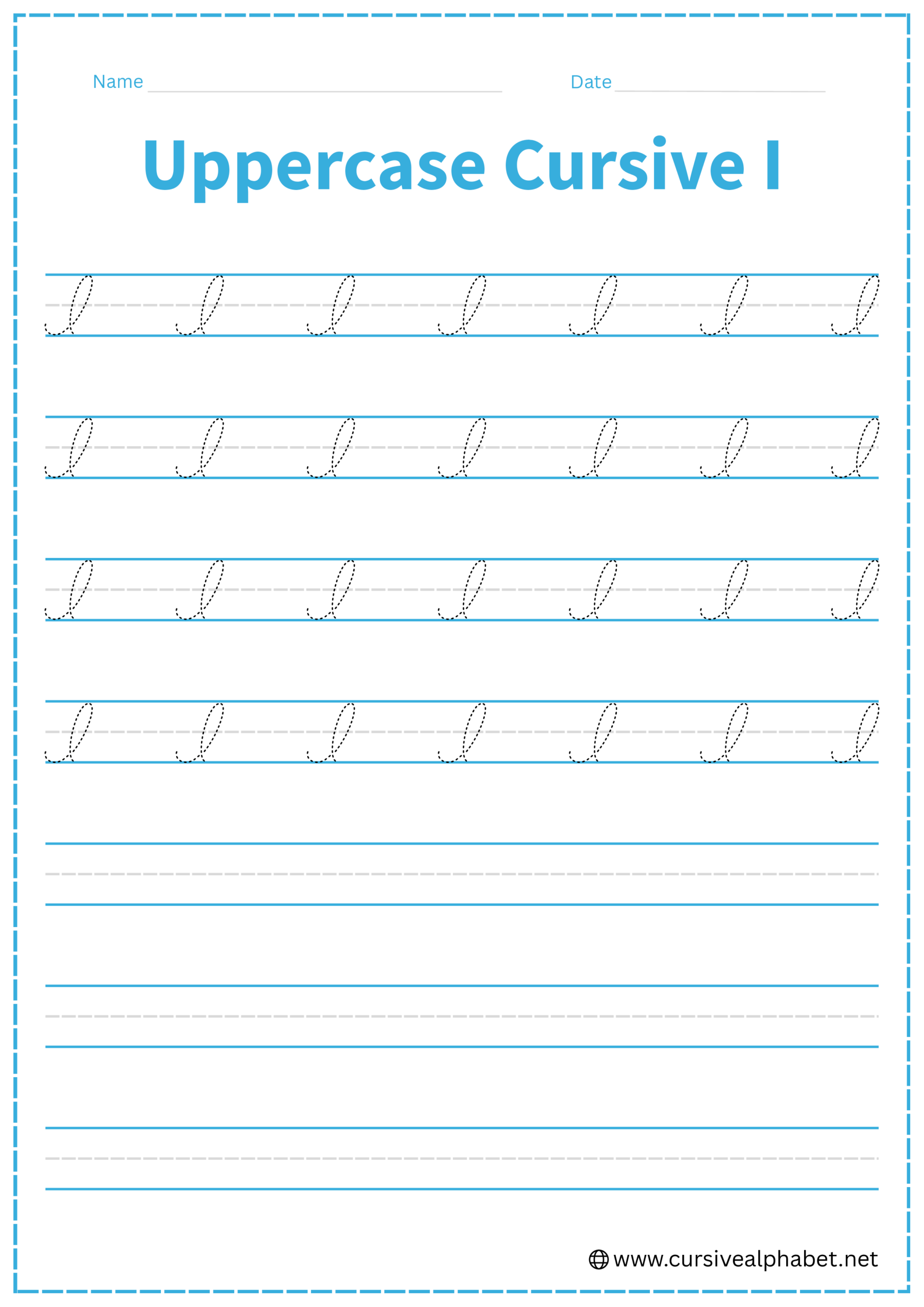
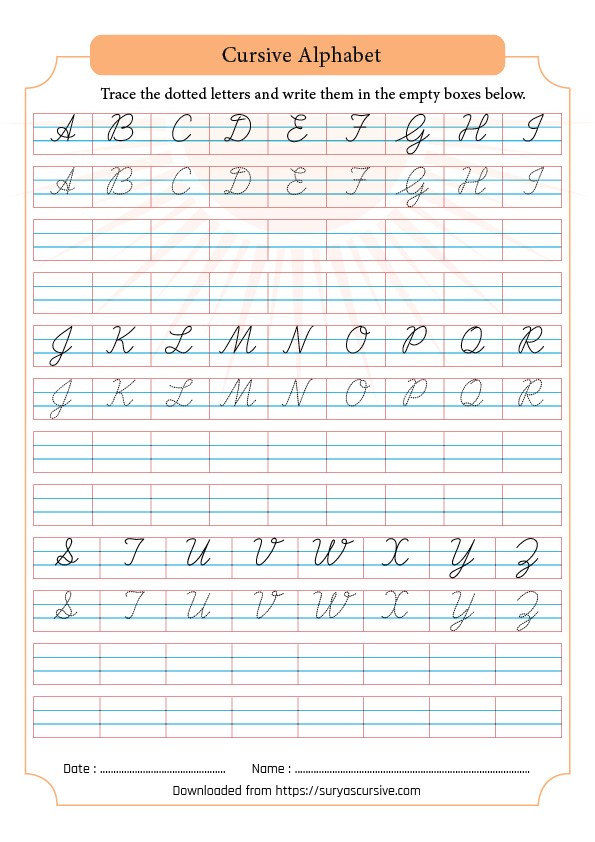
Mastering the capital cursive letter is a key building block in early education, as it lays the foundation for more complex writing skills and enhances overall handwriting abilities. Before moving on to harder concepts, such as writing sentences or short paragraphs in cursive, children need to master the basics of capital cursive letters.
The capital cursive letter worksheet serves as a bridging tool, helping children develop the necessary fine motor skills, hand-eye coordination, and letter recognition abilities. Research consistently shows that early exposure to cursive writing can improve children’s literacy skills, including reading and spelling. Child development experts agree that introducing cursive writing at a young age can also enhance children’s cognitive development and creativity.
As a hands-on classroom teacher, I have observed that children who start practicing cursive writing early tend to have better handwriting and are more confident in their writing abilities. In my experience, using worksheets like the capital cursive letter worksheet can be an effective way to introduce cursive writing to children, as it provides a structured and engaging way to practice writing capital letters.
For instance, I recall a student, Sofia, who struggled with writing capital letters in print, but after practicing with the capital cursive letter worksheet, she showed significant improvement in her handwriting.
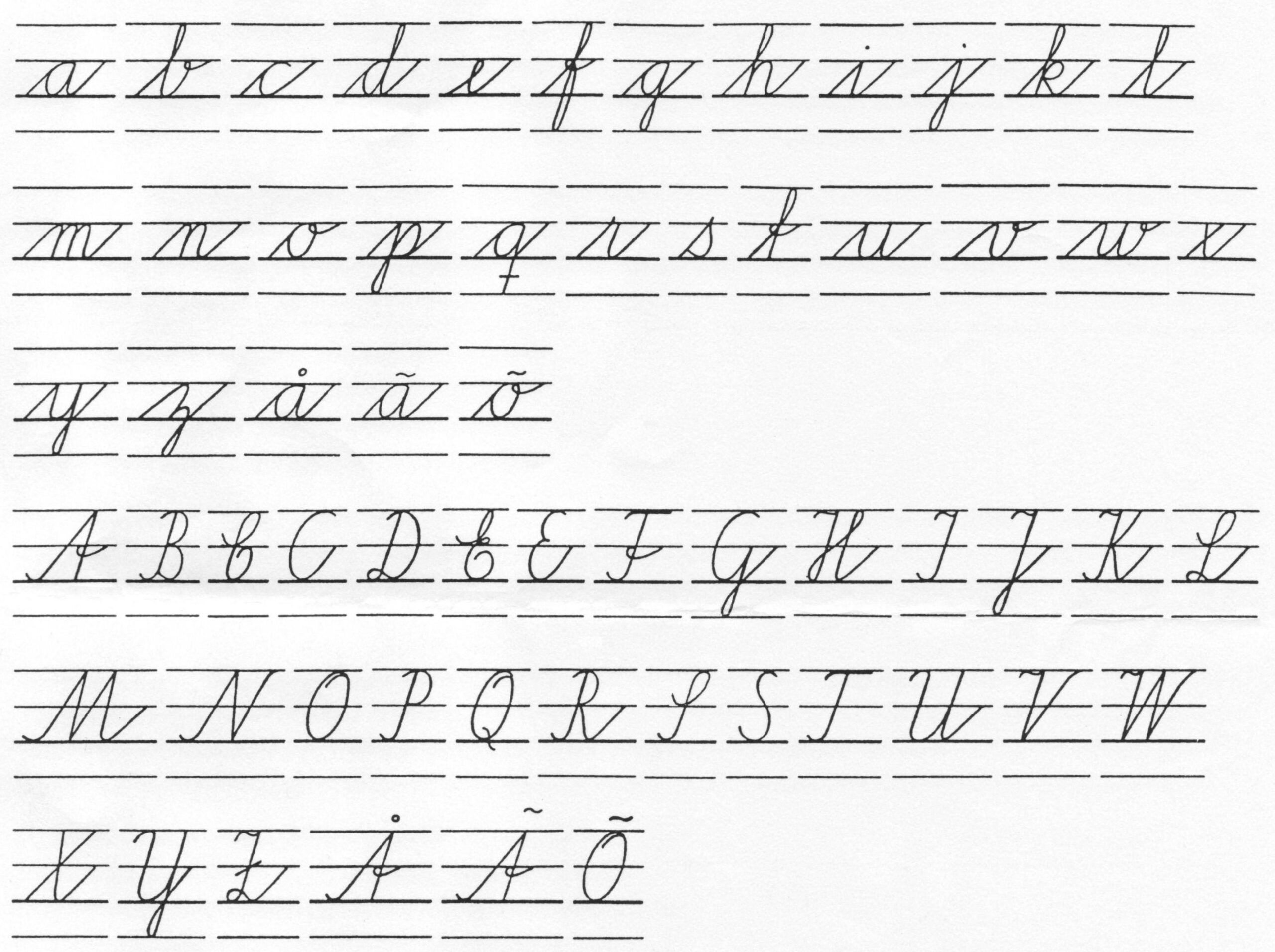
The Foundation of Cursive Writing
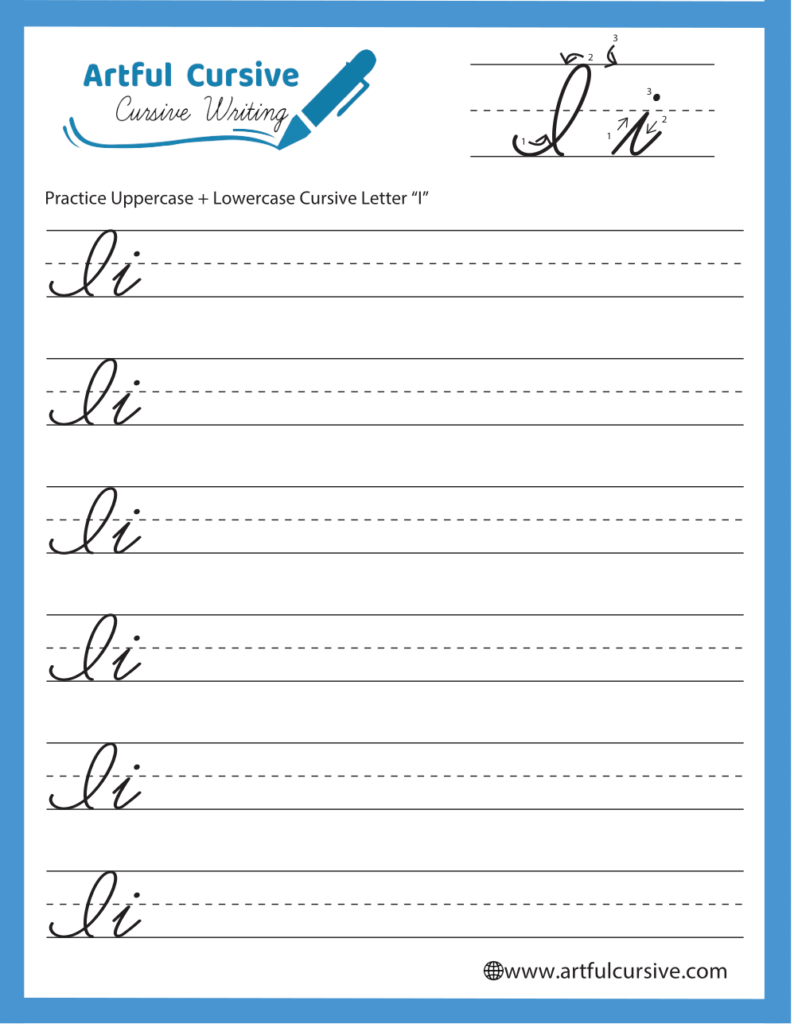
The capital cursive letter worksheet is designed to help children develop the fundamental skills required for cursive writing. By practicing the correct formation of capital cursive letters, children can improve their fine motor skills, hand-eye coordination, and letter recognition abilities. Studies on early literacy have found that cursive writing can help children develop a better understanding of letter-sound relationships and can improve their overall reading and writing skills. In my classroom, I have seen children struggle with writing capital letters in print, but after introducing the capital cursive letter worksheet, they have shown significant improvement in their handwriting. For example, during a lesson, I noticed that Sofia was having trouble writing the capital letter “I” in print, but after practicing with the capital cursive letter worksheet, she was able to write it correctly and with more confidence.
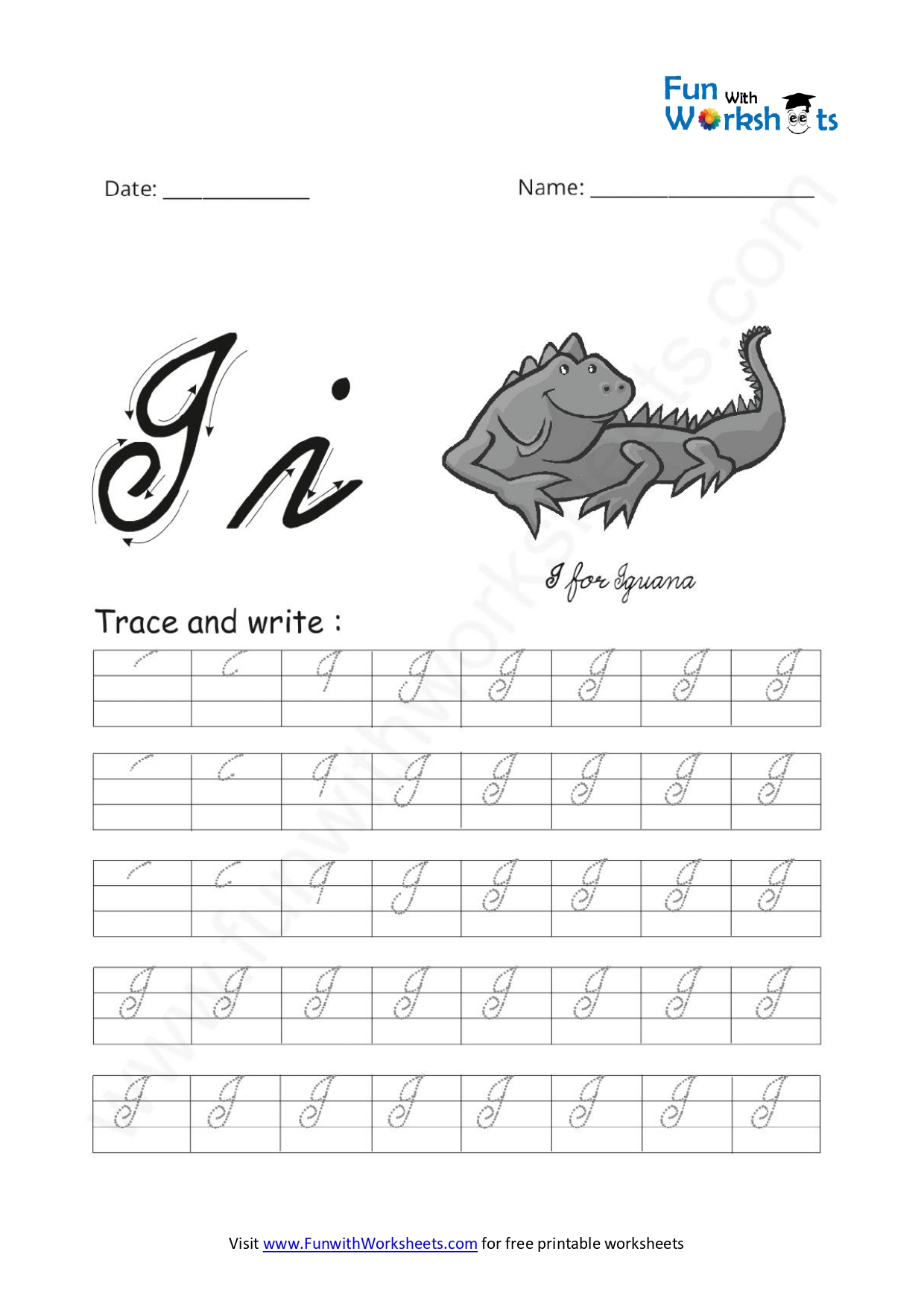
Mapping Worksheet Skills to Growth
The capital cursive letter worksheet is aligned with curriculum standards for early childhood education, which emphasize the importance of developing fine motor skills, hand-eye coordination, and letter recognition abilities. By using this worksheet, children can develop the necessary skills to write capital cursive letters correctly and confidently. Research consistently shows that early exposure to cursive writing can improve children’s literacy skills, including reading and spelling. Child development experts agree that introducing cursive writing at a young age can also enhance children’s cognitive development and creativity. For instance, the worksheet can help children develop the skills needed to write their names in cursive, which is an important milestone in early childhood education. You can find more resources on teaching cursive writing, including the Fancy Ways To Write Cursive Letters, which provides tips and tricks for making cursive writing more engaging and fun.

Effective Implementation Strategies
To get the most out of the capital cursive letter worksheet, teachers and parents can follow these implementation strategies:
- Start by introducing the worksheet in a one-on-one setting, allowing children to practice writing capital cursive letters with guidance and support.
- Use a variety of teaching methods, including demonstration, imitation, and practice, to help children develop the necessary skills.
- Provide feedback and encouragement, praising children for their efforts and progress.
- Make it fun by incorporating games and activities that promote cursive writing, such as tracing letters or writing short sentences.
- Use the Little Red Hen Coloring Pages Trace Letters Little Red Hen to make learning more engaging and interactive.
- Consider using the Big Letters To Trace Print to help children develop their fine motor skills and hand-eye coordination.
Multi-Sensory Extension Activity
To extend the learning experience, teachers and parents can try the following multi-sensory activity:
- Write a capital cursive letter on a piece of paper or whiteboard.
- Have the child trace the letter with their finger, using a variety of textures, such as sandpaper or play dough.
- Ask the child to write the letter on their own, using a pencil or pen.
- Repeat the process with different capital cursive letters, gradually increasing the difficulty level.
- Use the Complete Kindergarten Curriculum & Printable Hub to find more resources and activities for teaching cursive writing.
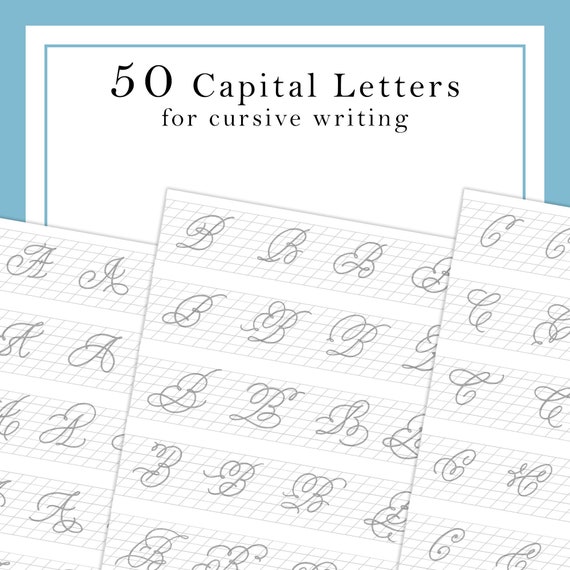
Differentiation for All Learners
Building Confidence Before Accuracy
For children who are anxious, reluctant, or frustrated with writing capital cursive letters, it’s essential to build confidence before accuracy. Teachers and parents can do this by:
- Providing a supportive and non-judgmental environment.
- Focusing on effort, rather than accuracy.
- Offering verbal encouragement and praise.
- Breaking the task into smaller, manageable steps.
- Using positive reinforcement, such as stickers or stars, to motivate children.
⚠️ Common Pitfall to Avoid: Focusing too much on accuracy, rather than effort, can lead to frustration and decreased motivation. Instead, focus on building confidence and providing support, and accuracy will follow.

Going Deeper for Children Ready for More
For children who are confident and accurate in writing capital cursive letters, it’s essential to provide intellectually stimulating extensions that challenge them and promote creative application. Teachers and parents can do this by:
- Introducing more complex cursive writing tasks, such as writing short sentences or paragraphs.
- Encouraging children to use cursive writing in their daily lives, such as writing letters or journal entries.
- Providing opportunities for children to create their own cursive writing activities, such as designing their own worksheets or games.
- Using the Printable learning worksheets for kids to find more challenging and engaging activities.
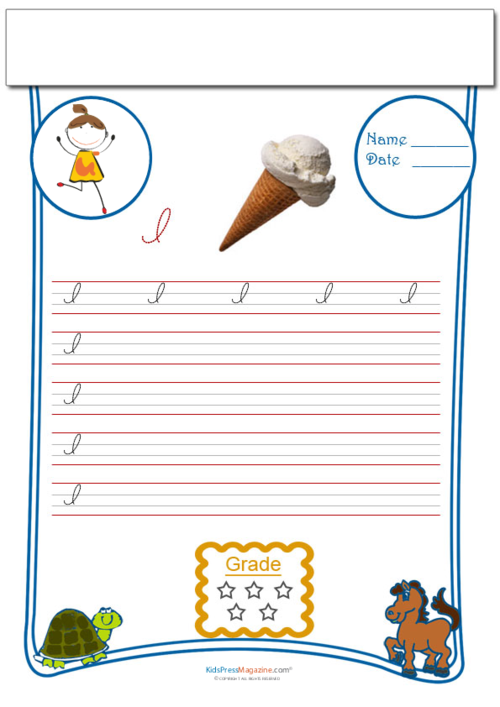
Key Takeaways & Reflection
In conclusion, the capital cursive letter worksheet is a valuable tool for teaching children the fundamental skills required for cursive writing. By following the implementation strategies and extension activities outlined above, teachers and parents can help children develop the necessary skills to write capital cursive letters correctly and confidently. Remember to focus on building confidence and providing support, rather than solely on accuracy, and to provide intellectually stimulating extensions for children who are ready for more. With patience, practice, and persistence, children can master the capital cursive letter and develop a strong foundation for future writing skills. As children progress in their writing journey, they will develop a growing sense of academic identity and confidence, which will serve them well in all aspects of their educational career.

Leave a Reply Cancel reply